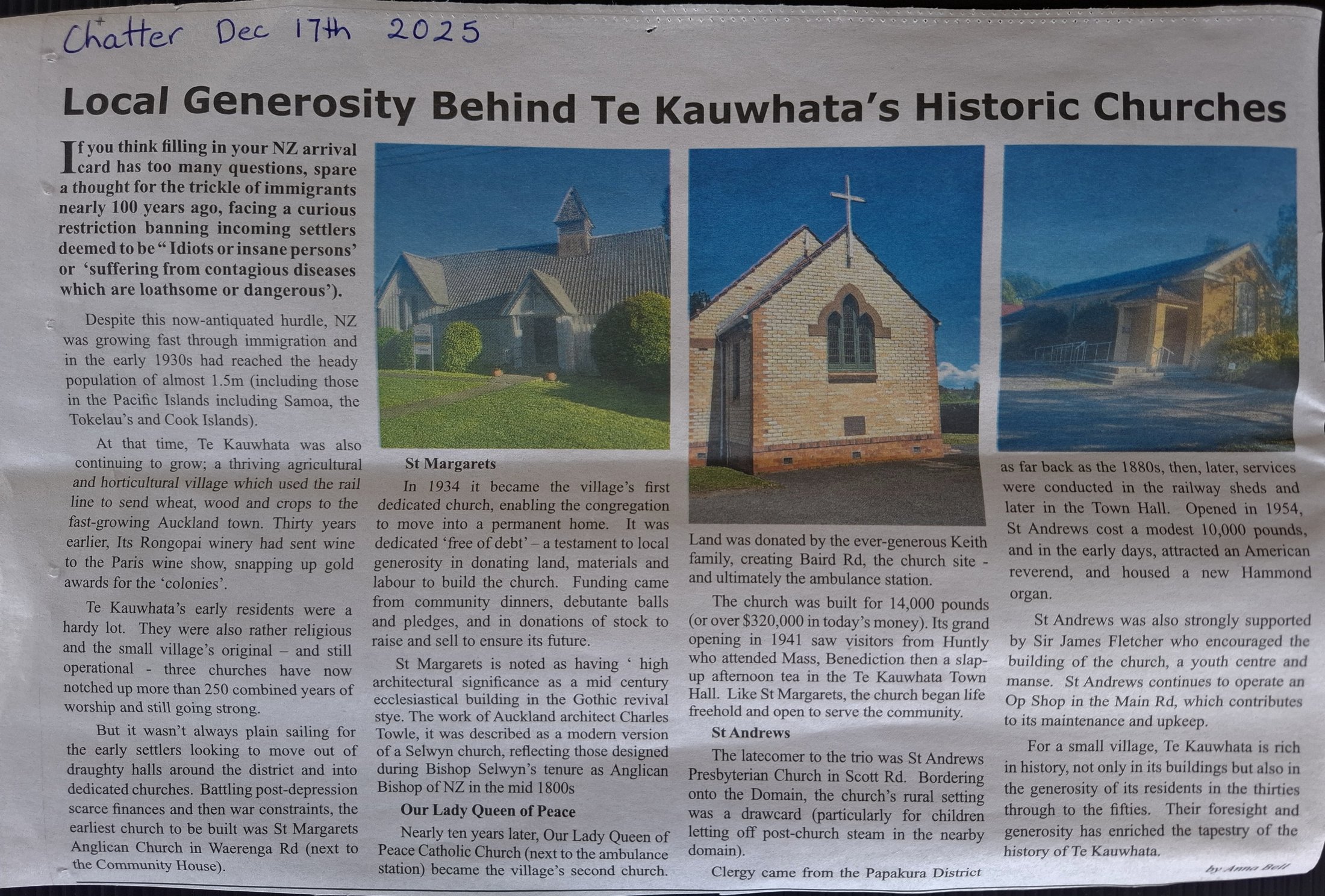
St Margaret's Anglican Church

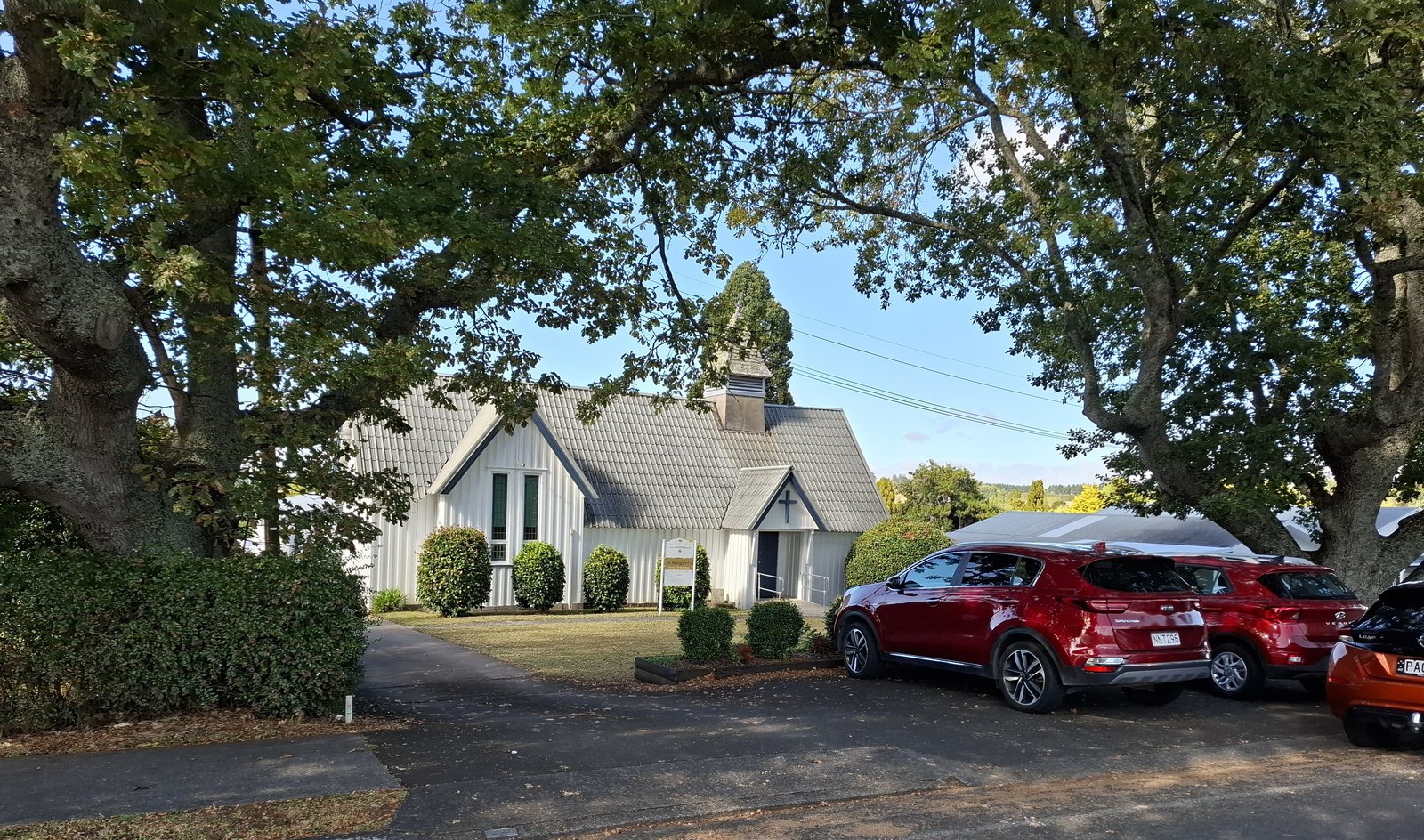
St Margaret's has been a cornerstone of the Te Kauwhata community for generations. Located at 3 Waerenga Road, our parish is part of the Diocese of Waikato and Taranaki, serving the spiritual needs of our local community and the wider North Waikato region.

Throughout our history, we have been blessed with dedicated clergy, committed parishioners, and a shared vision of loving God and serving our neighbours. Our church building stands as a testament to the faith and perseverance of those who came before us.

St Margaret's Anglican Church, Te Kauwhata

St Margaret's Anglican Church, Te Kauwhata

Our Namesake

St Margaret of Antioch

Our church is named for Margaret of Antioch, an early Christian martyr who lived in the late third or early fourth century. The daughter of a pagan priest, Margaret embraced Christianity and held firmly to her faith through persecution, giving her life rather than renounce Christ.

Her courage made her one of the most beloved saints of the medieval church, and churches around the world bear her name. Tradition remembers her as the patron saint of pregnant women, servant maids and those suffering from kidney ailments, and as a guardian against diabolical infestations.

Like Margaret, we are called to hold fast to our faith with quiet courage — a fitting patron for a little church with a big heart.

In the Press

As Featured in the Local News

St Margaret's has been a recognised part of the Te Kauwhata community for many years. Click the image to view it full size.

The Woven Flax Cross — Te Rīpeka Whiringa Harakeke

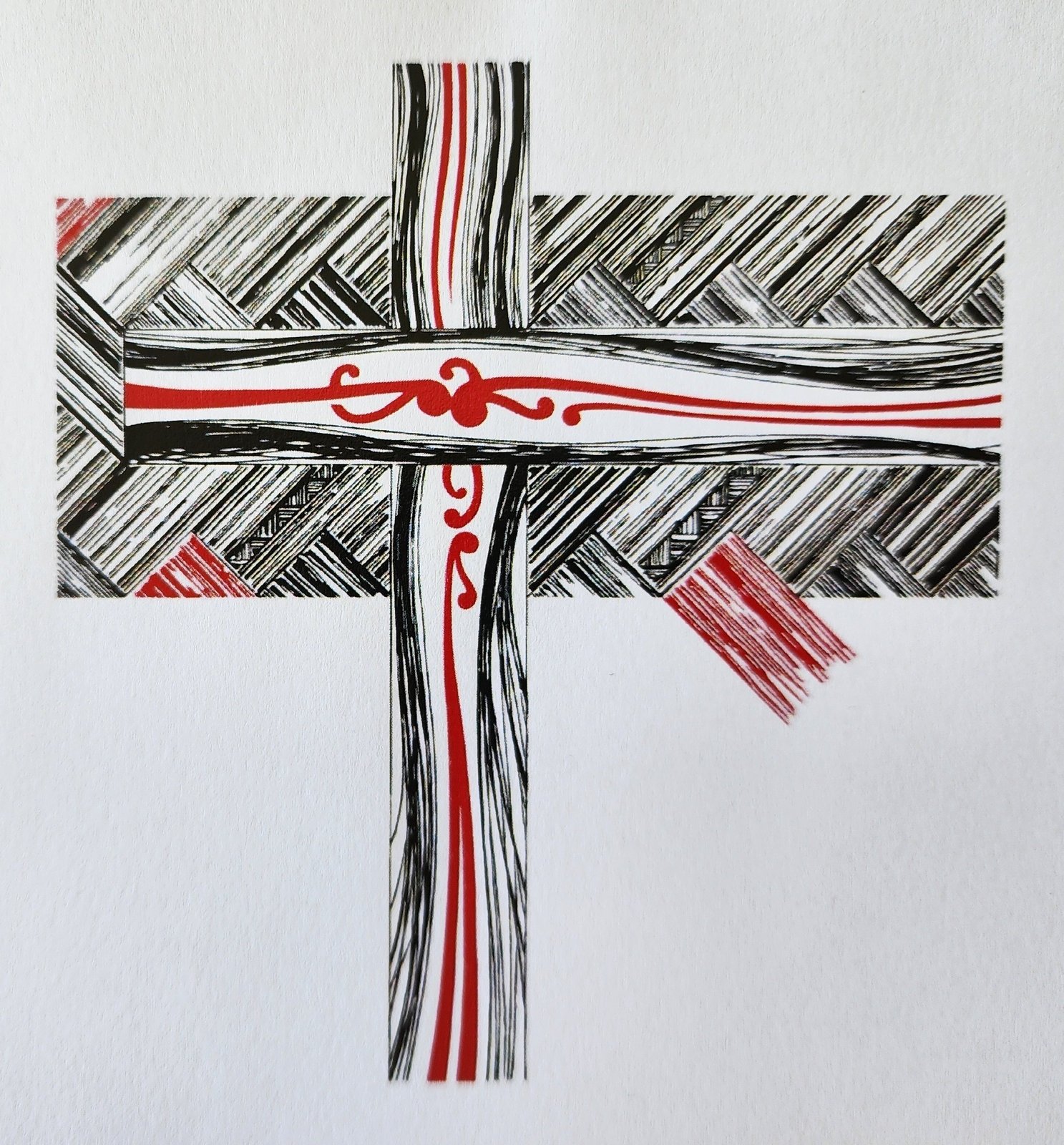
Te Rīpeka Whiringa Harakeke, designed by Ross Hemara

Our Symbol

The Woven Flax Cross
Te Rīpeka Whiringa Harakeke

In some Māori circles, the art of weaving is a symbol of the way in which the most fundamental life forms are knit together, evolve and grow. When one flax strand is held in the hand ready to be criss-crossed with another, the weaver says to herself "aroha atu" — "the love that goes forth". As the second strand is placed across the first, she says "aroha mai" — "the love that comes back". As love is sent out, so it returns: love given and love received are the full meaning of love itself.

The emerging kete, or woven flax bag, becomes a living sign of the way love creates — made to carry and share food and treasures between a community of people. It exists to serve a common good, a practical sign of the way love serves, which is the very nature of God.

The artist, Ross Hemara, was asked by the Anglican Church to design an indigenous cross, picking up strands from all three Tikanga of the church in these islands. The woven flax cross was chosen as the first work of art in our prayer book and has become a sign of being Anglican in these islands. At its centre is the koru, a sign of life, presented in red — the life blood, the life-giving love which flows through the heart of the Christian message. The flax strands move outwards, symbolising the life patterns of the Gospel being formed in a new creation.

— Archbishop David Moxon
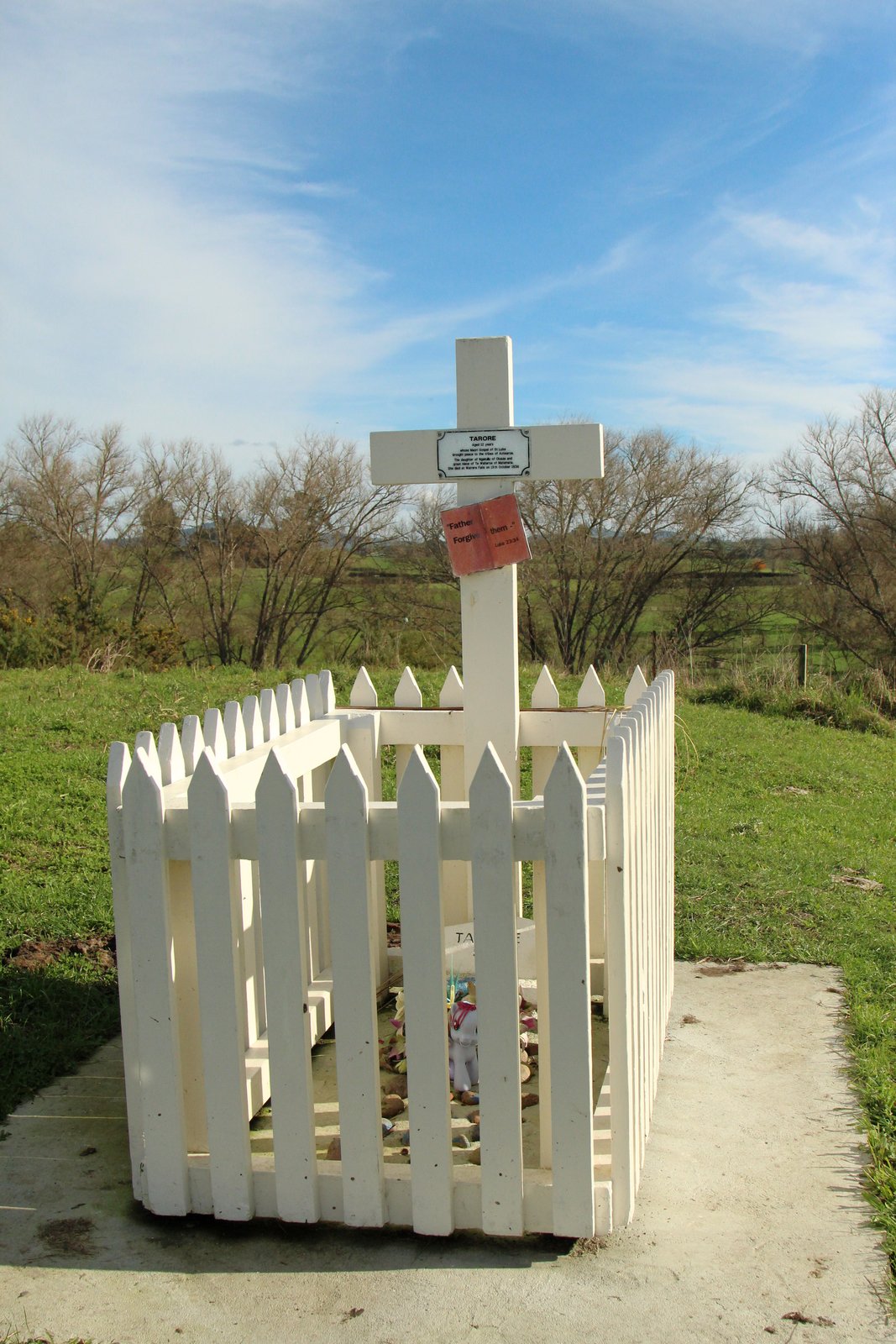
Tarore
A Story of Faith

Tarore

"Her story became a powerful testimony of forgiveness, redemption, and the transformative power of God's word."

Tarore was a young Māori girl whose story is deeply woven into the Christian history of Aotearoa New Zealand. In the 1830s, she attended the mission school at Matamata in the Waikato, where she learned to read and write.

Her father gave her a precious gift — a Māori translation of the Gospel of Luke, which she treasured and read daily. Tragically, Tarore was killed during a raid when she was about twelve years old. Her killer took her gospel as plunder.

Through a remarkable chain of events, that same gospel eventually led her killer to faith in Christ. Her legacy continues to remind us of the courage and faith of early Māori Christians in the Waikato region — and of the enduring power of a single life given over to God.